
Hypersonic Boundary Layer Transition Control
In hypersonic aerothermodynamics, boundary-layer transition control is not simply about delaying turbulence. In real vehicles, the objective is to place transition where it is predictable, tolerable, and aligned with system-level design.
For reentry configurations, a longer laminar run reduces skin friction and heating. For airbreathing hypersonic systems, the requirement can differ. Scramjet-powered vehicles often rely on a turbulent boundary layer at the inlet to ensure stable and predictable engine performance (Berry et al.). Transition, in this case, is deliberately induced rather than avoided.
Real-world applications
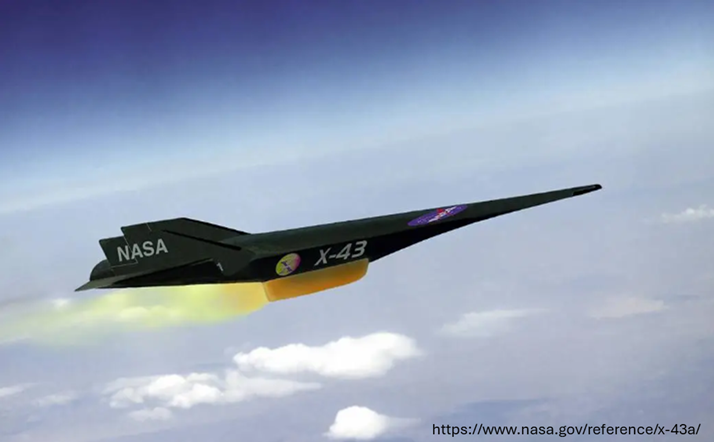
This philosophy is reflected in flight programs. The forebody of NASA’s X-43A incorporated surface trips to force transition ahead of the engine, aligning inlet conditions with propulsion design assumptions. In contrast, the Space Shuttle treated premature transition as a risk. Surface features such as gap fillers, cavities, and repairs were tightly controlled because they could trigger early transition and elevate heating. The STS-114 mission highlighted this sensitivity, where protruding gap fillers were removed in orbit to reduce thermal risk. The Boundary Layer Transition Flight Experiment (BLT FE) extended this approach by introducing a controlled protuberance to trigger transition at a known condition and compare against prediction models. More recently, BOLT-2 continued this methodology using discrete roughness elements on a hypersonic flight article.
These examples show that transition control in operational hypersonic vehicles is primarily achieved through surface design and roughness management rather than active flow control. The emphasis is on avoiding unintended triggers while enabling deliberate transition where beneficial.
System Implications
Advanced methods such as wall-temperature control, blowing, and engineered surfaces remain important research directions; their implementation in flight systems is constrained by integration complexity and uncertainty.
In practice, transition is treated as an integrated vehicle problem, where geometry, materials, surface quality, and trajectory are designed so that the transition location remains within acceptable limits. The goal is not to eliminate transition, but to manage it with sufficient predictability for reliable system performance.
References:
Berry et al - https://lnkd.in/e3RvD8a4
X-43A - https://lnkd.in/ewcfGtKz
Space Shuttle - https://lnkd.in/e8_DjqXr
BLT FE - https://lnkd.in/e6hs-HCk
BOLT-2 - https://lnkd.in/e7Husvx6
