
AEROSPACE SYSTEMS · PHYSICS-DRIVEN DIGITAL TWINS
Coupled physics. Interpretable predictions.
MARSHAL connects trajectory, shock structure, aerodynamics, aerothermal loading and thermal response in a computationally efficient framework for high-speed aerospace assessment.
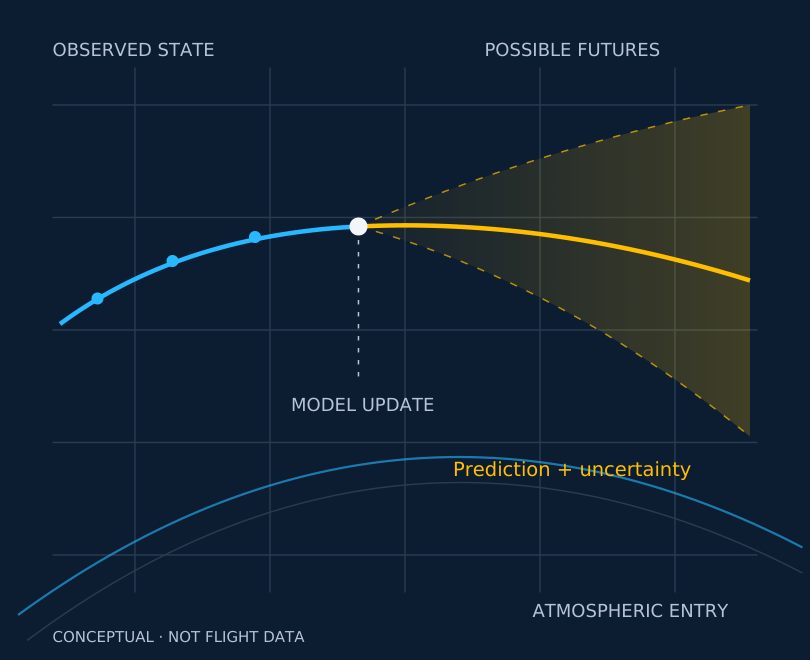
MARSHAL: Multiphysics Architecture for Real-time Simulation of High-speed Aerothermodynamic Loads.
THE EXISTING FOUNDATION
Follow the interactions that govern the outcome.
Trajectory & aerodynamics
Evaluate how state, geometry and aerodynamic forces influence the evolving flight environment.
Aerothermal loads
Connect shock and high-speed flow models to heating along the trajectory and over the vehicle.
Thermal response
Assess material and internal thermal behaviour, including the effects of coupled heat transfer.
MARSHAL is at the research-prototype and early commercialisation stage. Project scope determines the applicable physics, validation evidence, outputs and runtime evaluation.
EVIDENCE BEFORE CLAIMS
Flight, test and reference-case comparisons.
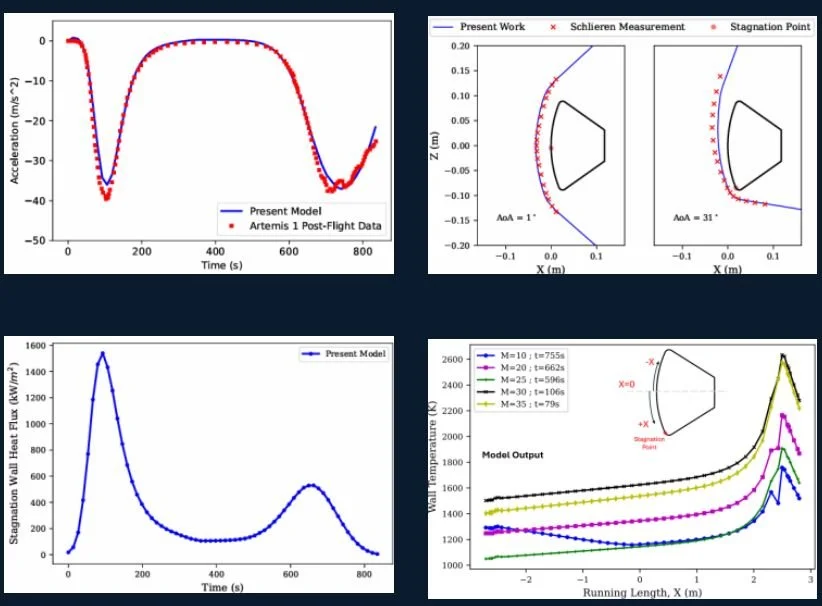
NASA Orion / Artemis I
Trajectory and aerothermal reference comparisons.
View technical paper ↗
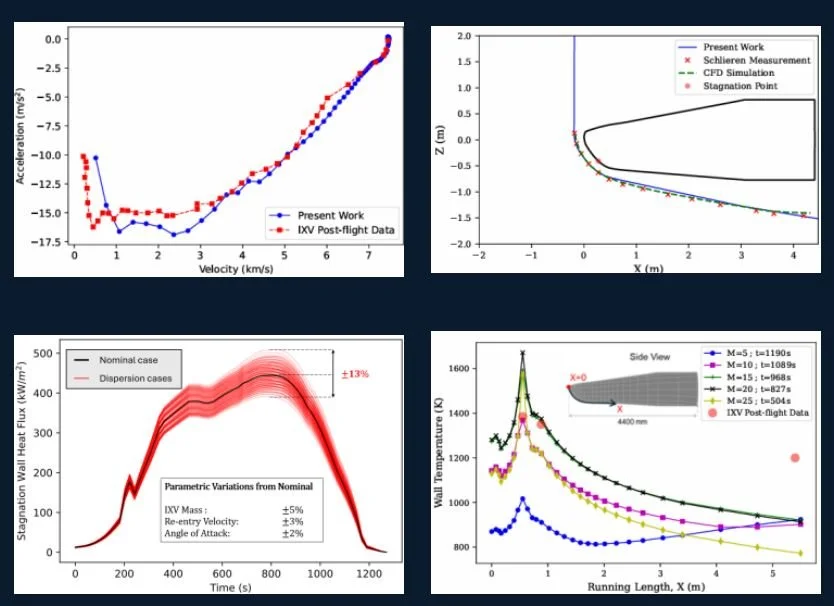
ESA IXV
Re-entry, shock-structure and thermal-response comparisons.
View technical paper ↗
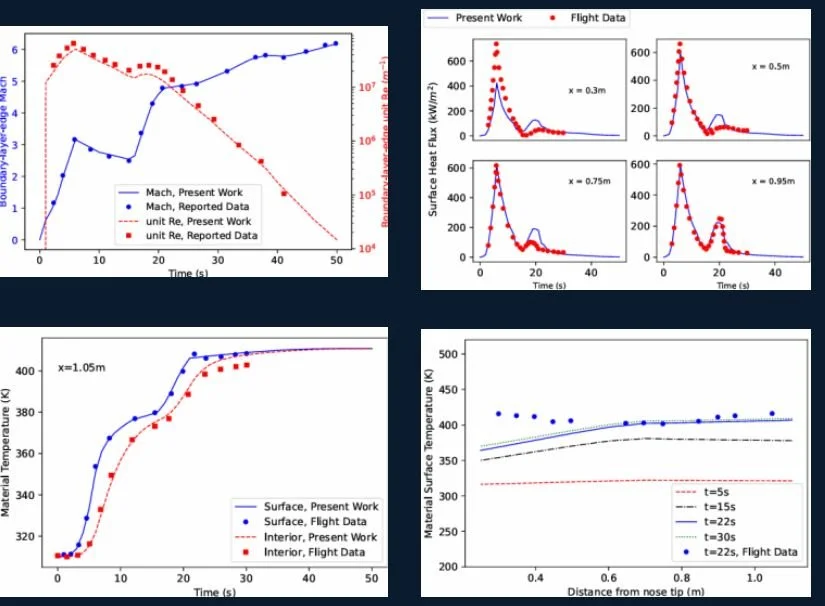
AFRL HIFiRE-1
Flight and test comparisons of high-speed thermal response
View technical paper ↗
Selected comparisons with flight, test and reference data; technical publications are linked below. Operational tracking integration requires additional development and evaluation.
MARSHAL · PREDICTION AFTER DETECTION
A physics component within a larger system.
01 - PARTNER INPUT
Resolved object state
State, time, reference frame, covariance and object hypotheses from the upstream tracking or fusion system.
02- VOLANTEK
MARSHAL physics
Coupled models, physical constraints and uncertainty analysis to assess candidate future behaviour.
Volantek contribution
Physical-feasibility assessment, prediction envelopes, thermal/performance constraints, uncertainty and model provenance.
03 - PARTNER WORKFLOW
Decision support
Interpretable predictions for analyst review, scenario evaluation and downstream system integration.
Partner contribution
Sensing, orbit determination, track fusion, intelligence attribution, operator interfaces, secure deployment and operational sustainment.
A CLEAR DEVELOPMENT BOUNDARY
Existing models. Defined integration work.
Research foundation
Research foundation
Executable low-order and multi-fidelity re-entry physics.
Refreshed-state ingestion and sequential forecast updates.
Trajectory, aerothermal and thermal-response case studies.
Object-performance and physical-feasibility features for partner workflows.
Parameter studies, sensitivity and uncertainty analysis.
Documented machine-readable outputs, provenance records and component interfaces.
Flight, test and reference evidence.
Scenario benchmarks and runtime profiling within an agreed integration environment.
BROADER COMMERCIAL USE
The same architecture supports more than surveillance.
Engineering studies
Compare high-speed configurations, trajectory conditions and payload thermal environments.
Hypersonics ↗
Re-entry assessment
Adapt entry physics to object-specific debris, survival and consequence questions.
Space Debris ↗
Digital-twin development
ABuild mission-specific models and connect them to design, test or operational workflows.
Digital Twin ↗
READ THE WORK
Technical publications.
PEER-REVIEWED JOURNAL · 2026
Prediction and Optimization Framework for Assessing Aerothermal Performance of Hypersonic Reentry Vehicles
AIAA Journal of Spacecraft and Rockets. Jeswin Joseph, Ryan Whitside and Jean-Pierre Hickey.
DOI: 10.2514/1.A36485 ↗
AIAA CONFERENCE PAPER · 2026
HIFiRE-1 Flight Assessment Using MARSHAL
Multiphysics Architecture for Real-time Simulation of High-speed Aerothermodynamic Loads. Jeswin Joseph, Ryan Whitside and Jean-Pierre Hickey.
DOI: 10.2514/6.2026-5069 ↗
WORK WITH VOLANTEK
Evaluate the physics. Scope the integration.
Discuss a representative case, request a technical walkthrough or explore a component work package with Volantek.
+1 647 451 5645